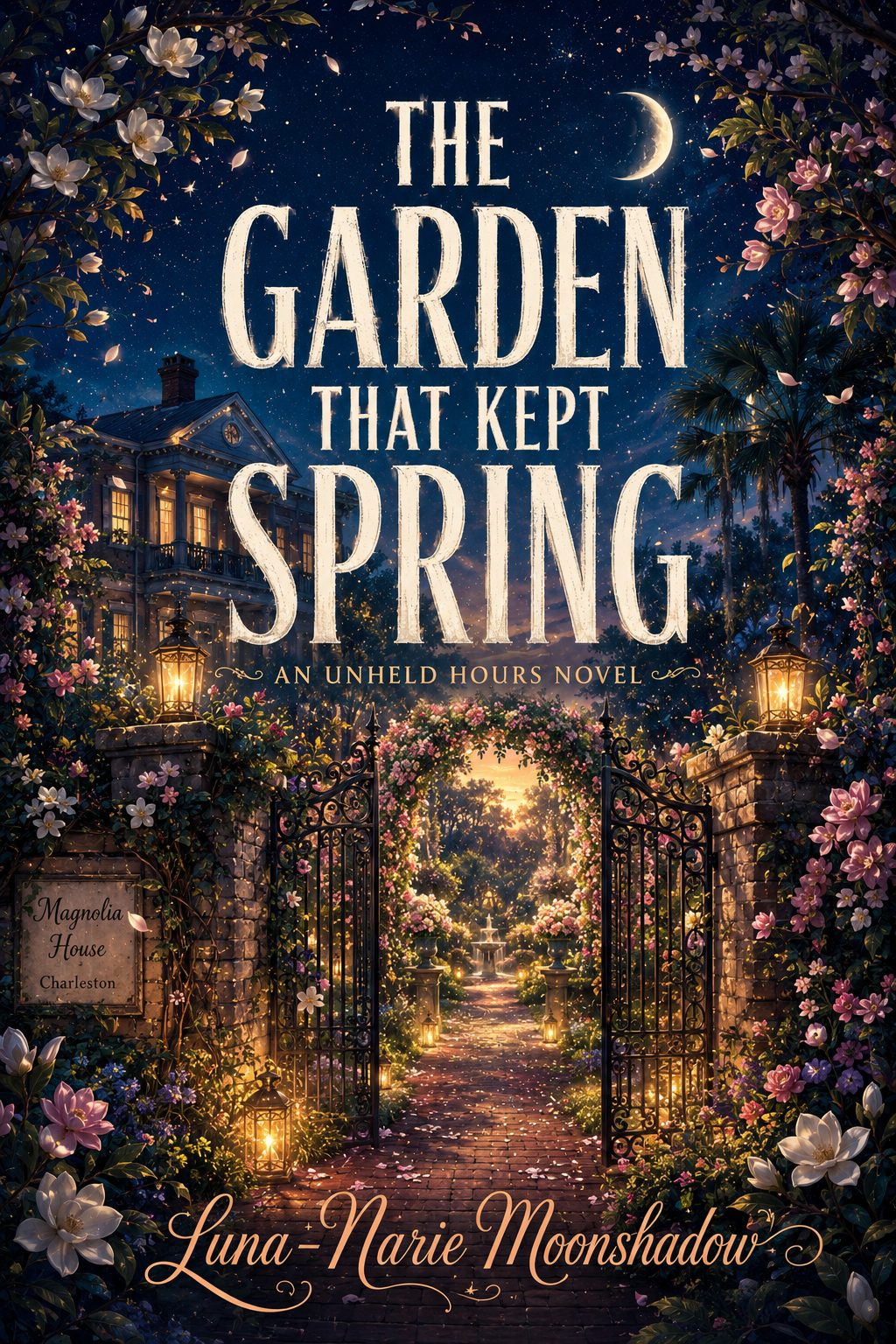
Spring is beautiful partly because it does not remain.
The Garden That Kept Spring began with the desire to preserve a perfect season. A garden that never leaves spring appears at first to be a gift: endless blossoms, soft light, beginnings without decline.
But a season that cannot change is not entirely alive.
The garden became a place where beauty had been protected from loss. Nothing withered. Nothing entered winter. Nothing completed its natural cycle.
That preservation carried an emotional question already woven through the series: when does keeping become another form of refusing?
We may preserve a relationship in the season when it felt most hopeful. We may remember someone at their brightest and resist the later complexity of who they became. We may cling to the beginning because beginnings contain possibility without yet requiring endurance.
Spring promises. A full life asks what happens after the promise.
This book allowed me to explore the difference between honoring beauty and imprisoning it. The garden’s endless spring protects every flower from death, but it also prevents fruit, seed, dormancy, and return.
Love can be treated in the same way. We may attempt to keep it untouched by change. Yet present-tense love must be chosen through seasons. It must be allowed to mature beyond the image we first adored.
The garden does not become less meaningful because it cannot remain perfect. Its meaning is deepened by change.
Writing Book Eleven also brought me close to the end of a world that had accompanied me for nearly two years. I understood the temptation to keep the series in its own spring, always becoming, never completed.
Finishing requires a kind of release.
A completed book can no longer remain entirely private. It must leave the protected garden of the writing process and encounter readers, interpretation, and lives beyond the author’s control.
The same is true of many creations and relationships. Keeping something safe may eventually prevent it from becoming what it was meant to be.
The garden asks whether beauty can be trusted to survive change, not as the same flower forever, but as seed, memory, nourishment, and another season’s beginning.
Spring matters because winter existed before it and will return after it.
The goal is not to prevent the cycle. It is to recognize that love, creation, and identity can remain meaningful while changing form.
A Simple Coffee Spell for Allowing Beauty To Change Rather Than Preserving It Perfectly
This gentle intention ritual uses exactly three everyday pantry ingredients. It is not a promise of a particular outcome. Its purpose is to pause, focus your attention, and choose how you want to meet the day.
Three ingredients
- 1 cup brewed coffee
- 1 teaspoon honey
- A small pinch of cinnamon
Optional ritual tools
These are not ingredients and are not required.
- One white tealight candle
- One rose quartz crystal, or any small stone that feels meaningful
- A notebook or scrap of paper
The ritual
Prepare your coffee as you normally would. Add each ingredient slowly, giving it a simple meaning as it enters the cup.
As you stir, say:
I do not need to see the entire path.
I choose the next honest step.
What is mine to carry will become clear through attention.
If using a white tealight, light it before drinking and let it represent clarity rather than certainty. If using a crystal, place it beside the cup as a physical reminder of your intention. Neither is required.
Take three unhurried sips. After the third, write one sentence beginning with:
Today, I will give my attention to...
Keep the sentence small enough to live rather than merely admire.
Pantry-magic note
The three ingredients are symbolic, not prescriptive. You may substitute an equivalent pantry item, but keep the finished spell to exactly three ingredients. The ritual belongs to the attention you bring, not to perfect supplies.