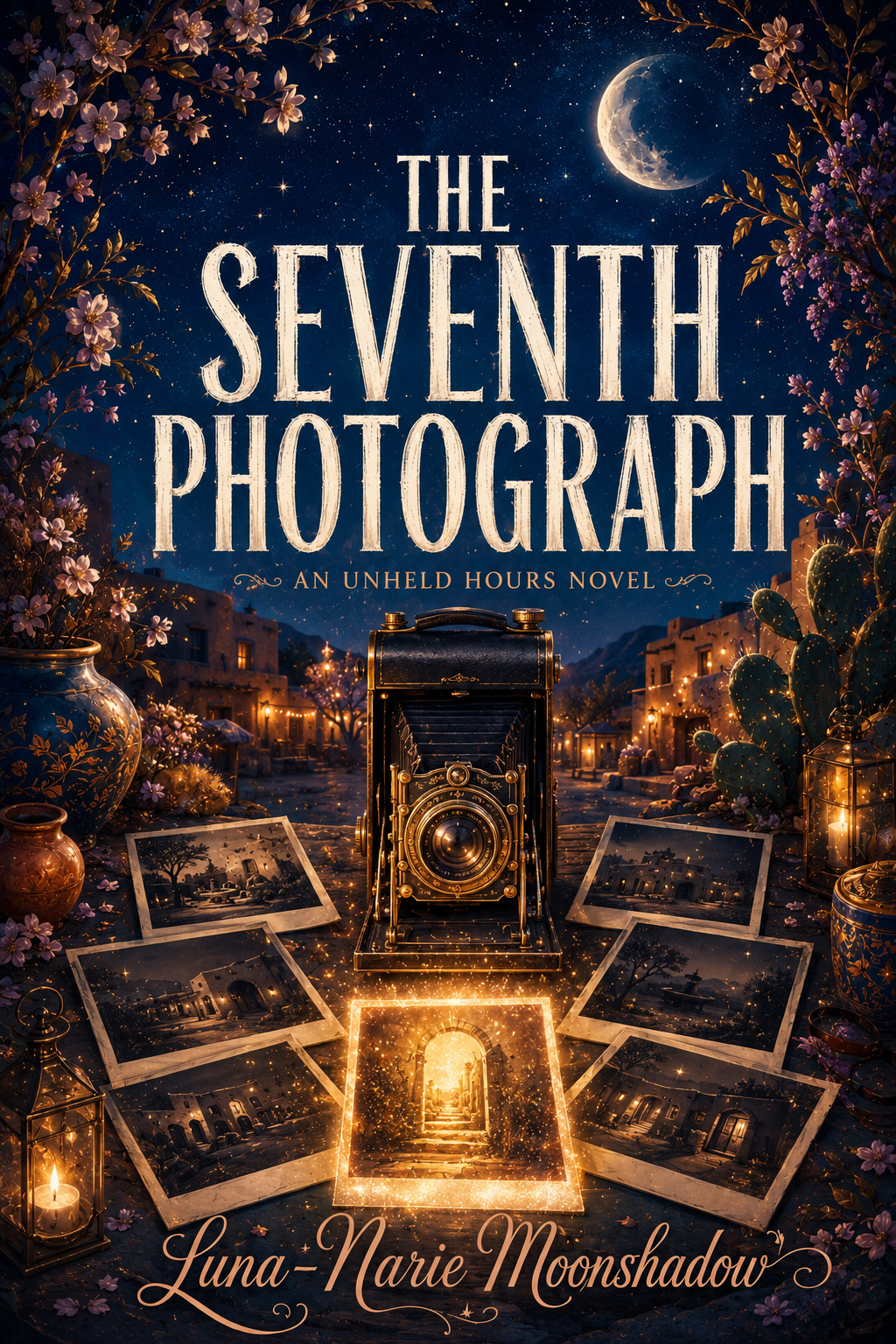
A photograph appears to prove that a moment existed.
It does not prove that everyone inside the frame experienced the moment in the same way.
The Seventh Photograph grew from my fascination with images as evidence, memory, inheritance, and invention. Family photographs often become anchors for a shared story. We point to a face and explain who that person was. We identify a house, a celebration, a summer, or a relationship.
Yet the image cannot show what occurred before the shutter opened or after it closed. It cannot record the thought behind a smile or the tension beyond the edge of the frame.
The seventh photograph became an object with the power to reveal more than the visible image. That possibility allowed the book to explore hidden histories and the confidence we place in preserved appearances.
Photographs can be deeply truthful. They can also become tools for simplifying complicated lives.
A person may be remembered through the image in which they looked happiest. A family may preserve the photograph that supports its preferred version of the past. Another image may disappear because it raises questions no one wishes to answer.
The magic in this book does not declare photographs false. It asks what they cannot hold.
This distinction matters across The Unheld Hours. The series does not suggest that one newly revealed truth erases every earlier one. Instead, revelation expands the frame.
Someone can have been loved and harmed. A celebration can have been joyful and difficult. A person can have smiled honestly while carrying grief.
The seventh photograph invites the character to look again, not only at the picture but at the story built around it.
Writing the book also made me think about the images we create of ourselves. We become our own archivists. We select what is shown, what is saved, and what is allowed to disappear.
There is no dishonesty in choosing beauty. The danger comes when the chosen image becomes the only truth we permit.
The photograph cannot hold an entire life. It can hold one fragment, one expression, one arrangement of light.
The reader’s task is not to distrust every image. It is to remain curious about what continues beyond the border.
Sometimes healing begins when we stop asking the photograph to prove the whole story and allow it to become what it always was: a doorway into a moment, not the final authority over it.
A Simple Tea Spell for Seeing Beyond The Image You Have Preserved
This gentle intention ritual uses exactly three everyday pantry ingredients. It is not a promise of a particular outcome. Its purpose is to pause, focus your attention, and choose how you want to meet the day.
Three ingredients
- 1 cup black tea or herbal tea
- One small pinch of ground cloves
- Honey or sugar to taste
Optional ritual tools
These are not ingredients and are not required.
- One white tealight candle
- One lapis lazuli crystal, or any small stone that feels meaningful
- A notebook or scrap of paper
The ritual
Prepare your tea as you normally would. Add each ingredient slowly, giving it a simple meaning as it enters the cup.
As you stir, say:
I do not need to see the entire path.
I choose the next honest step.
What is mine to carry will become clear through attention.
If using a white tealight, light it before drinking and let it represent clarity rather than certainty. If using a crystal, place it beside the cup as a physical reminder of your intention. Neither is required.
Take three unhurried sips. After the third, write one sentence beginning with:
Today, I will give my attention to...
Keep the sentence small enough to live rather than merely admire.
Pantry-magic note
The three ingredients are symbolic, not prescriptive. You may substitute an equivalent pantry item, but keep the finished spell to exactly three ingredients. The ritual belongs to the attention you bring, not to perfect supplies.